GUIDE FOR BEGINNERS · BY OLHA PO
If you want to learn cosmetic tattooing but you’re not sure which course to pick, or what good training should include, start here. I’m Olha Po, a licensed cosmetic tattoo artist. I’ve worked professionally since 2016 and I teach every small class at our Forest Hill studio myself. This guide is the conversation I’d have with you before you enrol.
IN THIS GUIDE
Part 1 Brow, lip or eyeliner?
Part 2 Why mapping comes before the machine
Part 3 Questions to ask a trainer
Part 4 Completion is a starting point
Part 5 Read next
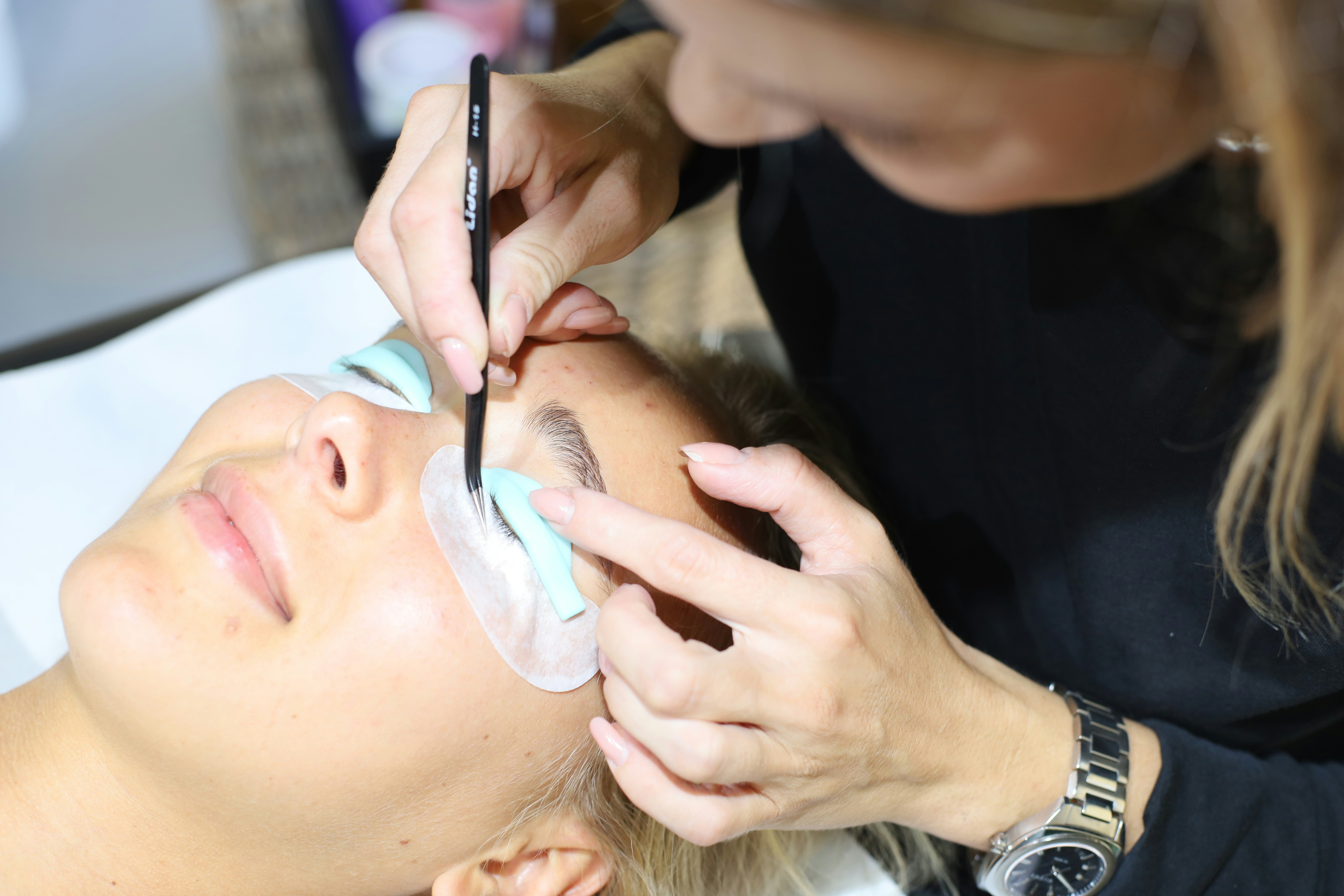
Reference photo: close, careful work around the brow and eye area.
PART 1 — CHOOSING AN AREA
Our three core courses all share the same foundations, but each area asks something different of you. Choose based on what you want to offer and the work that interests you most, not on what looks easiest.
COURSE 01
Powder brows and ombre brows. The focus is on symmetry, face mapping and building soft shading that suits each client’s features. For many beginners, brows are the natural place to start.
COURSE 02
Here colour theory carries the most weight. You learn how pigment sits with natural lip tone and how to plan a shape that stays balanced.
COURSE 03
A delicate area that needs a steady hand, precise placement and careful hygiene. It suits students who enjoy fine, controlled work and are prepared to practise patiently.
PART 2 — BEFORE THE MACHINE
Most of the skill is in the decisions you make before the needle touches the skin. Mapping and symmetry tell you where a brow, lip line or liner should sit on this particular face. Colour theory and pigment choice tell you how the result is likely to look once it settles. Skin assessment and hygiene keep the work safe.
Machine technique matters, but it builds on all of this. That’s why our training starts with measuring and planning, then moves on to practical work. You can see the full sequence in Before the Needle: How We Teach.
PART 3 — BEFORE YOU ENROL ANYWHERE
Who actually teaches the class? Is it the person whose experience is advertised?
Is the trainer still practising? Current, hands-on work keeps teaching practical.
How much individual attention will I get? Small classes mean someone is watching your progress.
Are mapping, colour theory and hygiene taught properly? Or does the course go straight to the machine?
What exactly does the certificate represent? Ask before you pay, not after.
What are the deposit, cancellation and refund terms? Get them in writing. See our booking and course terms.
PART 4 — AFTER THE COURSE
Our courses are practical skills training, not university degrees. Finishing one does not guarantee you work, income, independent professional competency or regulatory approval to practise. What it gives you is a solid foundation to keep building on.
Before you offer treatments to clients, you are responsible for meeting any applicable business registration, insurance, infection control and local regulatory requirements. Cosmetic tattooing carries real risks. It must be done with appropriate training, hygiene and safety precautions.
PART 5 — READ NEXT
Powder Brows, Ombre Brows or Microblading?
Cosmetic Tattoo Course Package, for broader training across the core techniques
Still unsure which course suits your experience? Send us an enquiry and we’ll talk it through with you by email or phone.