
TECHNIQUE REFERENCE · ILLUSTRATIVE MATERIAL
Use this page as a reference sheet for the planning side of cosmetic tattooing: brow shapes, mapping lines, lip and eyeliner design, and how pigment colour is chosen. Each entry links to the course where it is taught hands-on in Forest Hill, Melbourne, by Olha Po, a licensed cosmetic tattoo artist who has worked professionally since 2016.
The photographs here are illustrative reference images. They are not student work or client results.
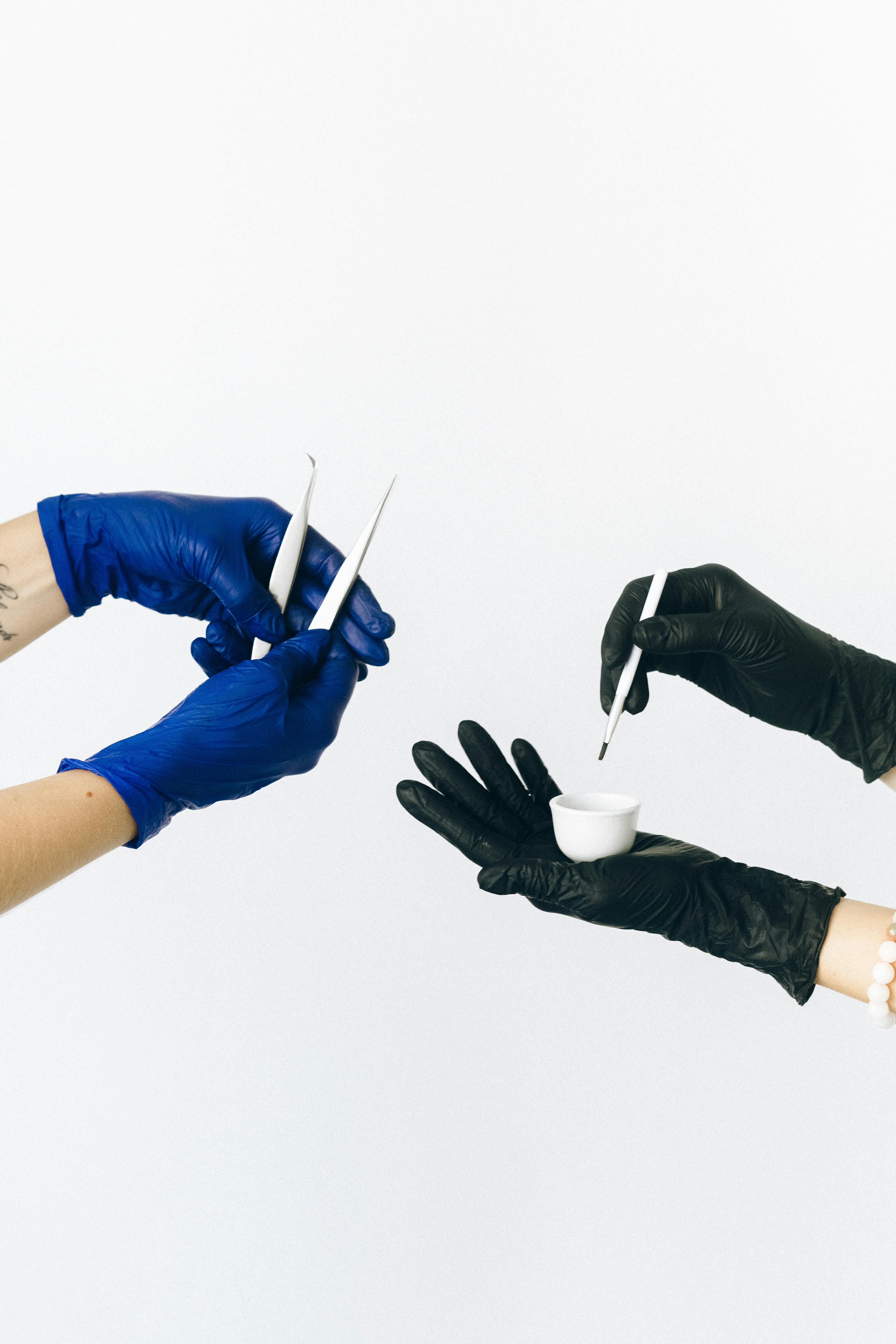
Reference photo: tweezers, a marking tool and a small pigment container, held in gloved hands.
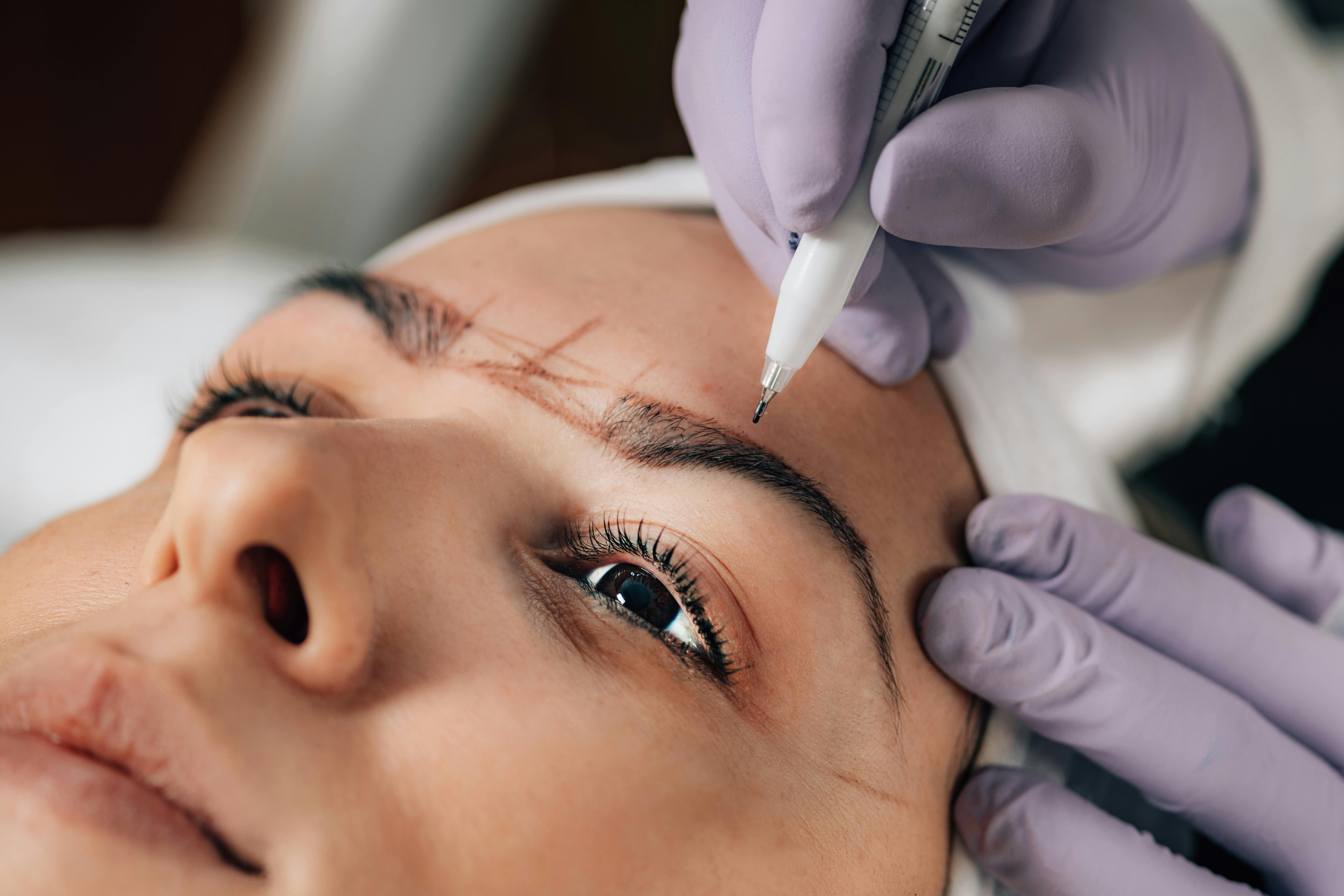
Reference photo: a brow being outlined with a cosmetic tattoo pen.
SHEET 01 · EYEBROW TATTOOING
A brow is mapped before any shape is chosen. Pre-draw lines mark where the brow should start, where it arches and where it ends, all measured against the client’s own features rather than a stencil. Symmetry is checked from several angles, because faces are rarely identical on both sides.
Powder brows — a soft, even shaded finish built up gradually. Eyebrow Tattoo Course
Ombre brows — lighter at the front and deeper towards the tail, so shading has to be planned along the map. Eyebrow Tattoo Course
Microblading strokes — fine, hair-like strokes made by hand, where the direction of each stroke follows the mapped shape. Microblading Course
Not sure which brow technique to start with? Read Powder Brows, Ombre Brows or Microblading?
SHEET 02 · LIPS & EYELINER
Lips and eyes are two of the most delicate areas you will work on. In both, the plan matters as much as your hand control: what you draw beforehand decides what you tattoo.
COURSE 02
Planning starts with the client’s natural lip line and how evenly the two sides sit. You then decide on the outline, how far the colour should fade and which pigment tone suits the lip’s natural colour. Lip blush is usually designed as a soft wash of colour, not a hard edge.
COURSE 03
Liner planning covers where the line sits along the lash line, how thick it should be and whether it extends at the outer corner. Because you are working so close to the eye, positioning, hygiene and steady technique all come before style.
SHEET 03 · PIGMENT & COLOUR THEORY
Colour theory is part of every brow, lip and eyeliner course. You learn to read skin tone and undertone, think about how a pigment may look once it has healed rather than on the day, and decide when a colour needs to be adjusted. This is also the basis for correction work, which is why Olha’s background in cosmetic tattoo correction and removal shapes how she teaches pigment choice.
Plan for healed colour, not day-one colour.
A pigment can look different once the skin has healed, so the choice is made with that stage in mind.
See how planning, colour and practice fit together in Before the Needle: How We Teach, or explore broad training across the core techniques in the Cosmetic Tattoo Course Package.
SHEET 04 · SPECIALIST TECHNIQUES
Our specialist courses rely on the same habit as brow, lip and liner work: assess carefully first, then work. All of these practical procedures carry risks. They must be carried out with proper training, hygiene and safety precautions.
Fine Line Tattoo Course — planning steady, precise lines where there is very little room for error.
Laser Hair Removal Course — assessing the skin and preparing a safe work area before any laser use.
Laser Tattoo Removal Course — looking closely at existing pigment, often placed years ago by someone else, before deciding on any approach.
Saline Tattoo Removal Course — a non-laser approach to correcting cosmetic tattoos, which starts with understanding the original work.
Finishing a course does not guarantee employment, income, independent competency or regulatory approval to practise. Before offering treatments commercially, you are responsible for meeting any business registration, insurance, infection control and local regulatory requirements. Course Information & Student Responsibilities
FURTHER READING
If you want to talk through which technique suits your experience, you can enquire about a course and we’ll get back to you.