COURSE 05 · MICROBLADING · FOREST HILL
Our microblading course is hands-on, face-to-face training in Forest Hill, Melbourne. Olha Po teaches every small class herself. She is a licensed cosmetic tattoo artist who has worked professionally since 2016. You’ll learn how to plan a brow, build fine hair-like strokes by hand and care for the skin before, during and after the work.
THE TECHNIQUE
All three are eyebrow tattoo techniques, but they place pigment in different ways and produce a different look. One isn’t better than the others. The right choice depends on the client’s skin, their natural brows and what they want. Learning to make that call is part of your training. For a longer comparison, read Powder Brows, Ombre Brows or Microblading?
HAND TOOL · HAIR-LIKE STROKES
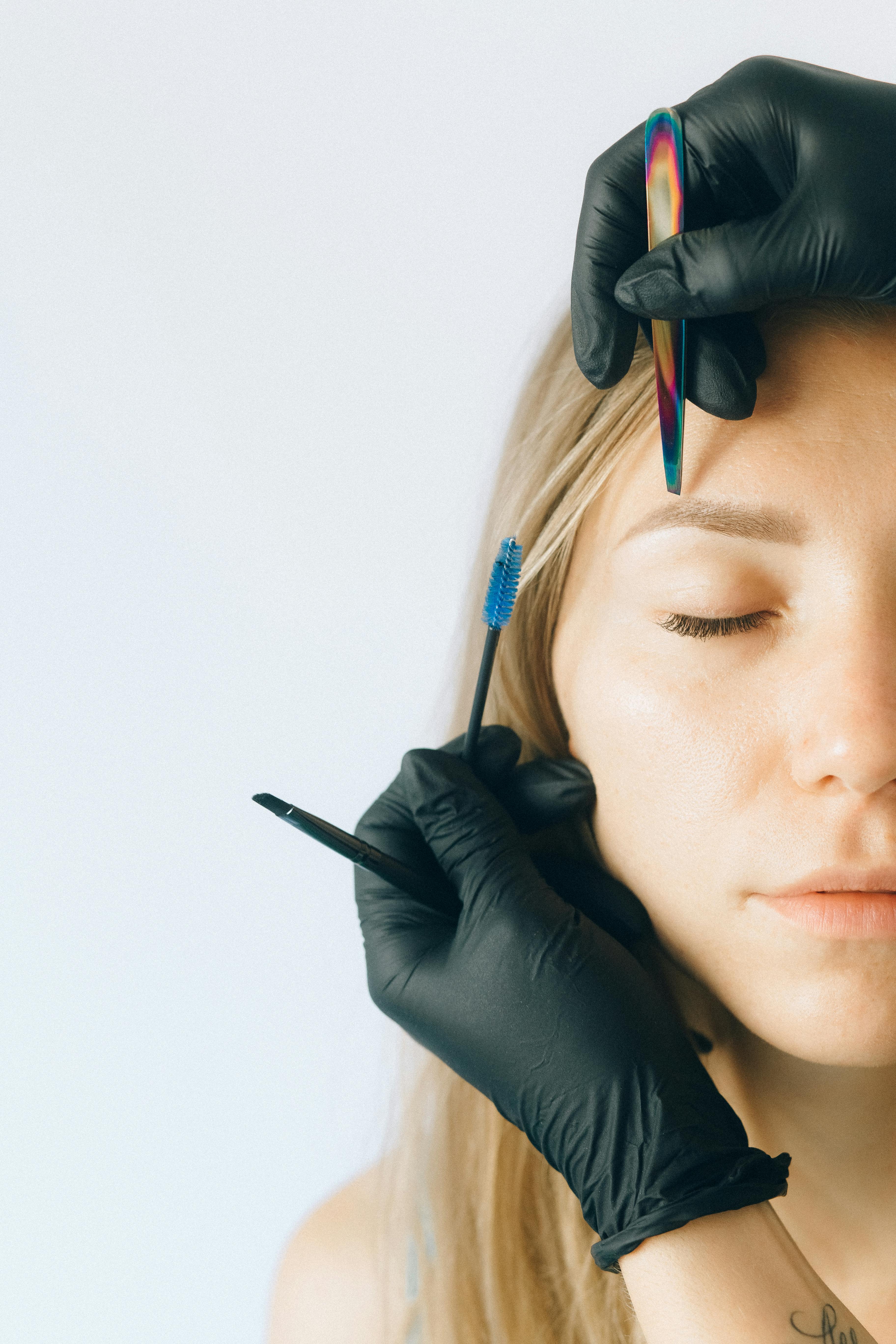
A manual hand tool with a row of very fine needles places pigment in thin strokes that follow the direction of natural brow hair. The aim is a textured, hair-stroke look. Because you draw each stroke by hand, the work depends on steady pressure, consistent depth and a stroke pattern that suits the brow in front of you.
MACHINE · SOFT SHADING
A cosmetic tattoo machine places pigment as tiny dots, building up a soft, shaded finish rather than individual strokes. Ombre brows grade that shading from lighter at the front to more defined towards the tail. These machine techniques are covered in our Eyebrow Tattoo Course.
Many people think microblading is just following a drawn line with a blade. In practice, the planning and judgement come first, and the stroke comes last.
STEP — MAPPING & SYMMETRY
Mapping start, arch and tail points, checking balance across the face and pre-drawing a shape that suits the client’s features.
STEP — STROKE PRACTICE
Repeated practice on stroke direction, spacing, angle and pressure, with Olha watching and correcting your technique as you go.
STEP — PIGMENT & COLOUR THEORY
How undertones, skin tone and natural brow colour affect pigment choice, and why healed colour can look different from fresh work.
STEP — SKIN & HYGIENE
Infection control, safe set-up and disposal, and learning to recognise skin that may not suit hair-stroke work.
STEP — AFTERCARE GUIDANCE
How to give clients clear aftercare guidance and set realistic expectations about how the brows will heal.
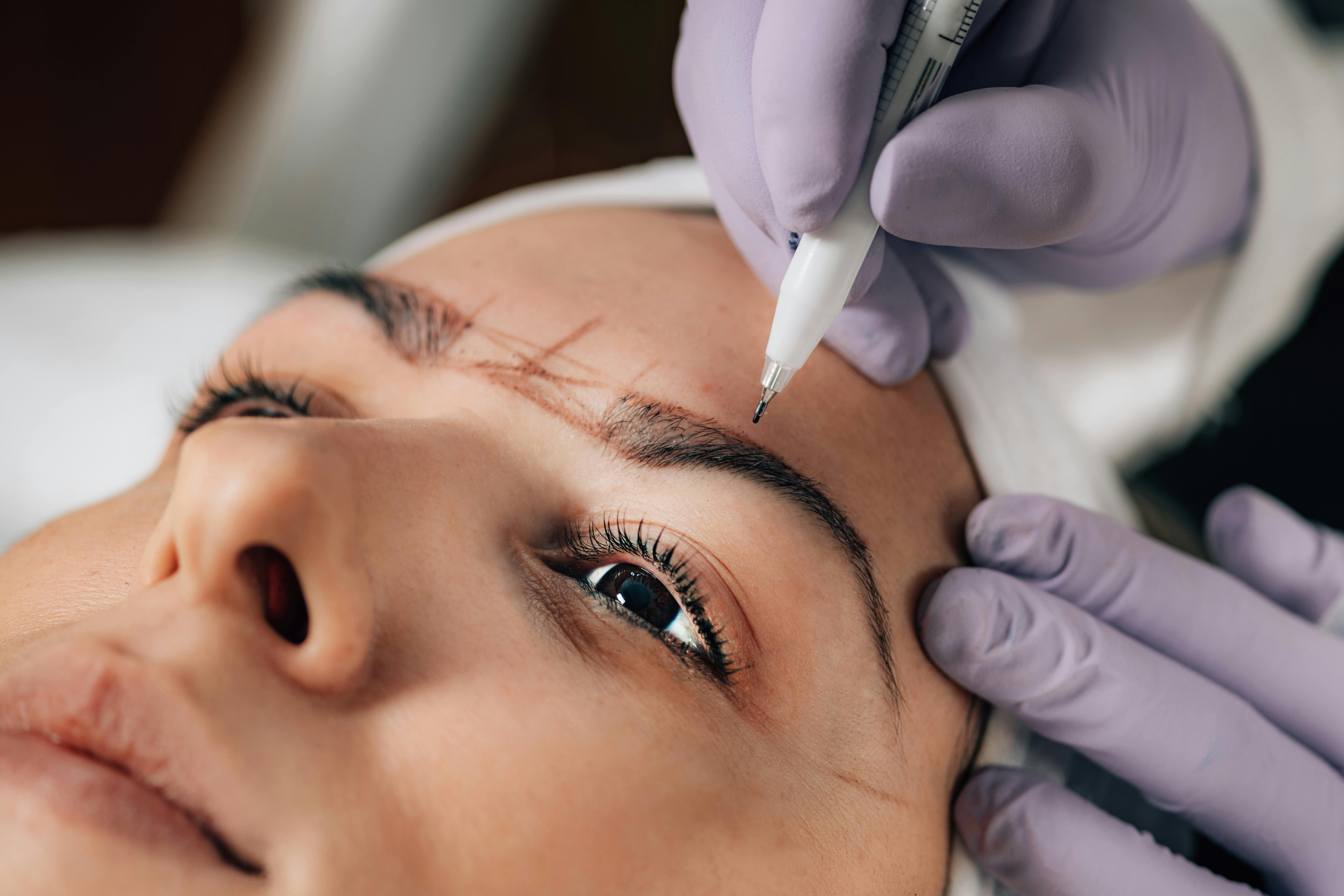
Reference photo: eyebrow work in progress.
WHO IT SUITS
The course suits adults who are starting out in cosmetic tattooing, as well as beauty professionals who want to add a hand-stroke brow technique to their work. If you already do powder or ombre brows, microblading gives you a different way to approach brows. You’ll learn the hand control it needs, which is quite different from using a machine.
Classes are small and Olha teaches you directly, so your progress gets individual attention. You can ask questions as they come up and practise each step until it feels steady. If you’re not sure whether to choose microblading or the Eyebrow Tattoo Course, get in touch and we’ll talk it through with you.
BEFORE YOU ENROL
This is practical skills training, not a university degree or a nationally accredited qualification. A completion certificate shows that you finished the training. It doesn’t guarantee employment, income or independent professional competency, and it doesn’t give you regulatory approval to practise.
Microblading breaks the skin, so it carries risks. It must only be done with proper training, hygiene and safety precautions. Before offering treatments commercially, you’re responsible for meeting any business registration, insurance, infection control and local regulatory requirements that apply to you.
We’ll explain fees, deposits, cancellations and refunds when you enquire. These are subject to Australian Consumer Law.