
A new artist’s kit can look like a catalogue: machines, cartridges, blades, pigments, rulers, practice skins, films and sleeves. Each item does one job, and it’s worth knowing that job before you buy anything. This guide covers what each tool is for and what a beginner should understand about it. Brands and trends come second.
ITEMS ON THESE PLATES
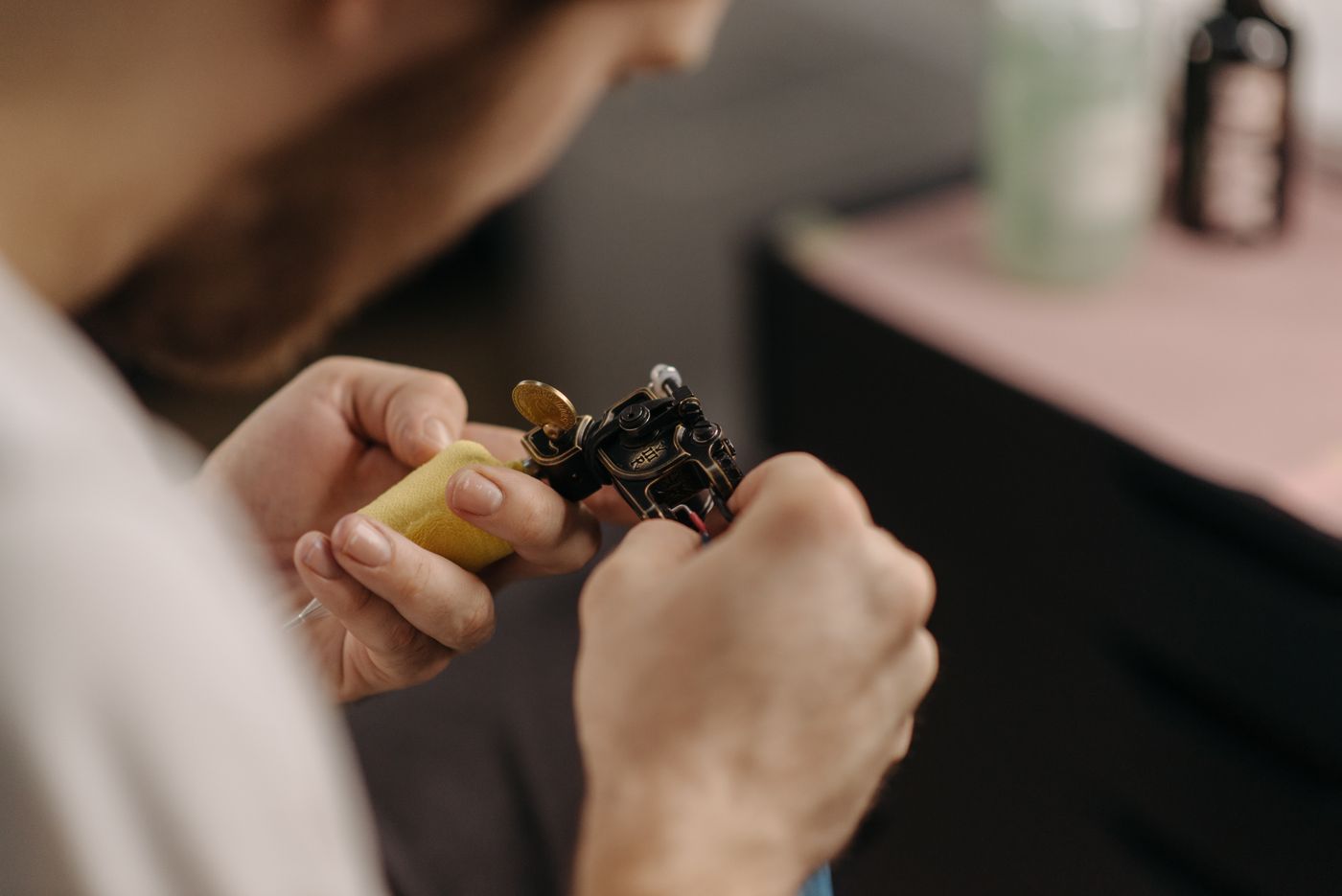
Most powder, ombre and fine line work is done with a pen-style rotary machine. The machine moves the needle at a set speed, and the artist controls hand speed, angle and pressure. For a beginner, the brand matters less than the feel. Does the stroke run steady? Can you hold the weight through a long session? Does the grip suit your hand? Is it easy to wipe down and cover with a barrier sleeve?
Learning to keep your settings and hand speed consistent matters more than any single feature. The machine technique is covered in the Powder & Ombre Brows Course and the Fine Line Tattoo Course.
Cartridges are sealed and single-use. They’re described by needle count and grouping. Single-point needles suit fine detail, and round or magnum groupings suit shading. A built-in membrane stops pigment flowing back into the machine.
Students learn which grouping gives which effect, and why a cartridge is never reused, even on the same client. Before opening one, check the packaging is intact and the sterilisation and expiry markings are clear.
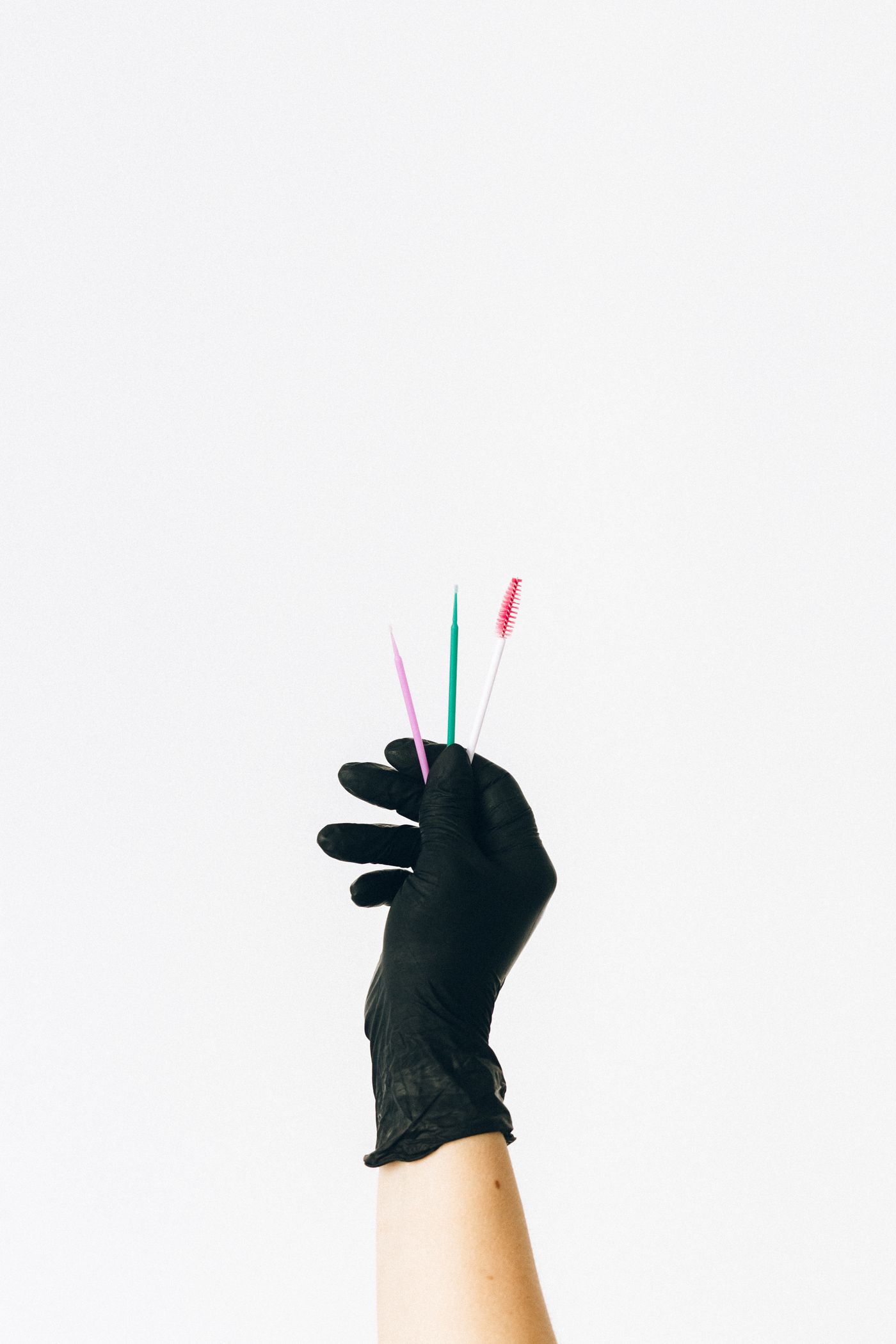
Microblading is done by hand, not by machine. The tool is a handle fitted with a disposable blade made of very fine needles, set in a slope or U shape. It opens a fine hair stroke as pigment goes in. Blades vary in needle count and flexibility, and both change the width of the stroke. Most beginners do better getting to know one or two blade shapes well than working from a drawer full of options.
No tool touches the skin until the brow is mapped. Mapping pencils, pre-inked string, rulers and callipers let you mark symmetry based on the client’s own features rather than a template. A careful map shows up in the healed result more than a new blade does. The hand technique is taught in the Microblading Course, and Microblading Training: What to Expect explains the practice drills.
Cosmetic tattoo pigments are made for the face, and they differ in base and in how they heal. Learn to read the label: ingredients, batch number and expiry date. Record which pigment you used on each client so the colour can be matched at a touch-up.
Synthetic practice skins come as flat sheets or moulded faces. They let you repeat hair strokes, shading passes and lip outlines as often as you need. They don’t stretch, bleed or heal like real skin, so they build hand control. They can’t teach you how deep to go.
The same pigment can heal differently depending on skin undertone and how deep it sits. That’s why colour theory and depth control are taught alongside the equipment. See Powder Brows Training Explained for how shade is built up.
Beginners often spend the most on machines and blades and the least on hygiene supplies, yet these are the items you’ll use on every client. Every pass of the needle breaks the skin, so the setup has to keep single-use items and cleanable surfaces strictly apart: wrapped, used once and thrown away, or wiped down between clients.
In Australia, skin penetration work is regulated by state and territory health rules and by local councils. Requirements for premises, waste disposal and record keeping differ from place to place, so check the rules where you plan to work before you buy supplies or set up a room.
A TYPICAL SUPPLY LIST
Single-use nitrile gloves
Barrier film, machine sleeves and cord covers
Single-use cartridges, blades and pigment cups
An approved sharps container
Surface disinfectant and disposable wipes
Client record and consent sheets
1. Train first. Once you’ve used a machine or blade under guidance, you’ll know what you actually need.
2. Ask what equipment is used during training, so your own tools feel familiar.
3. Sort every item into single-use or cleanable, and plan to restock the consumables.
4. Buy pigments and cartridges only from suppliers who give full labels, batch numbers and expiry dates.
5. Check your local skin penetration rules before you set up a room.
More guides: Choosing a Cosmetic Tattoo Course · Student Tips for Cosmetic Tattoo Training · Cosmetic Tattoo Career Guide. For a question about a course, contact us.