Cosmetic tattoo training typically moves from theory to practice. You learn why skin behaves the way it does, how to measure a face, how to steady your strokes on practice skins, how supervised work is guided, and how to keep refining your technique after a course ends. This guide explains what each stage usually covers and compares the techniques by area of the face.
Training typically covers these five stages, though the time spent on each varies from course to course. Before you enrol, ask how the course you are considering divides its time between them. Structure, format, inclusions and any schedule are confirmed when you enquire.
Stage 1
Skin structure, how pigment settles and fades, colour theory for different skin tones, infection control and client consultation. Theory is what lets you explain a result, not just repeat it.
Stage 2
Measuring proportions, finding the start, arch and tail of a brow, tracing a lip border and checking symmetry against how the face moves. Mapping is usually drawn and redrawn many times before any needle work.
Stage 3
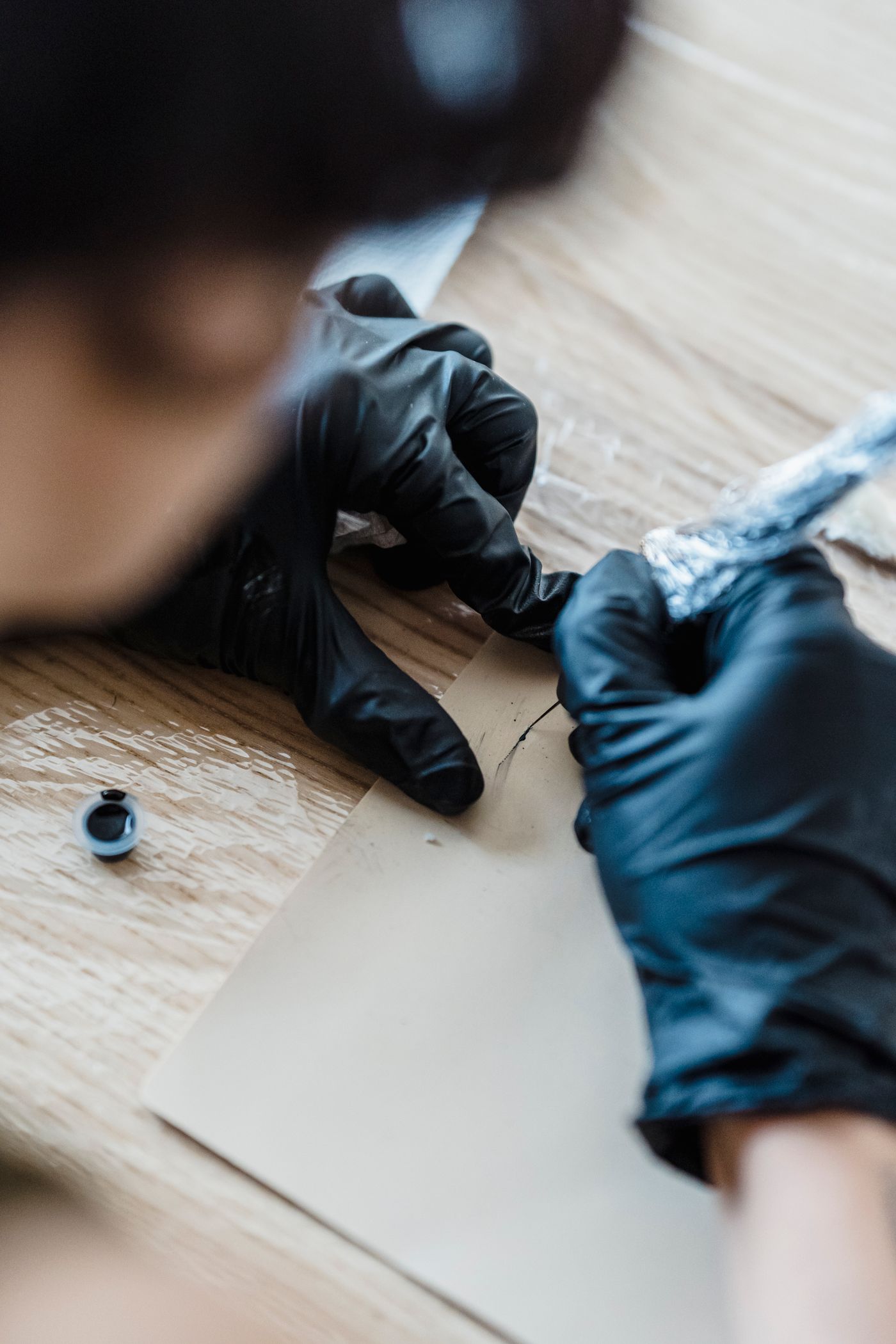
Repeating stroke drills, shading passes and line work on synthetic skin to build control over hand speed, angle and pressure. Our student tips explain how to get more out of each drill.
Stage 4
Working on a live model with a trainer beside you, who corrects your depth, stretch and mapping as you go. Read about the trainers to see who guides this stage.
Stage 5
Reviewing healed results, keeping a record of your work and adding new techniques one area at a time. Before you work on clients, check the skin penetration requirements with your state or local council.
Each area of the face has its own skin, movement and margin for error. Many students start with one area and add the others later. The Cosmetic Tattoo Course is a suggested starting point before you specialise; what suits you is discussed when you enquire.
BROWS
Brows depend on mapping more than any other area. Hair-stroke work needs a steady, even hand, while shaded brows build colour gradually in layers.
LIPS
Lip skin is thin and moves constantly. Training focuses on colour selection, a clean border and the Cupid’s bow, and on how colour settles as the lips heal.
EYES
Eyeliner work sits close to a sensitive area, so it demands good stretch technique, careful positioning and calm client handling. Many students add it once their line control is well established.
SKIN
Fine line work trains consistent, delicate linework. Removal training covers a different skill: assessing existing pigment and planning how to lighten it.
i. How much of the course is theory and how much is hands-on practice?
ii. Will I work on live models, and who supervises that work?
iii. Which equipment and materials are supplied, and which do I buy myself?
iv. What support is available after the course finishes?
v. Can I see genuine healed work by past students?
For a longer checklist, read Choosing a Cosmetic Tattoo Course. To learn about the tools, see the Cosmetic Tattoo Equipment Guide. You can also browse the Student Work Gallery.

How to Become a Cosmetic Tattoo Artist in Australia
Microblading Training: What to Expect
Powder Brows Training Explained
Know which area you want to start with? Send a course enquiry. For anything else, use the contact page.