
These answers are grouped the way a decision usually unfolds. First you choose a technique, then you check the starting point, then the format and enrolment, and finally where the skill can take you. Where a detail depends on a particular course, the answer points you to that course page or to an enquiry.
BEFORE YOU ENQUIRE
i. Name the area of the face you want to work on first: brows, lips, eyes or skin.
ii. Be honest about your starting point, whether you are brand new or already work in beauty.
iii. Check the rules for skin penetration businesses in your state and local council.
iv. Plan practice time after the course, not only during it.
v. Write down the questions this page doesn’t answer and take them to your course enquiry.
Jump to: Choosing · Experience & practice · Formats & enrolment · Careers
II
Start with the area you most want to work on. The Cosmetic Tattoo Course is the anchor program and the broadest introduction. If you already know brows are your focus, compare the Eyebrow Tattoo Course, Microblading Course and Powder & Ombre Brows Course. The full index is on the courses hub.
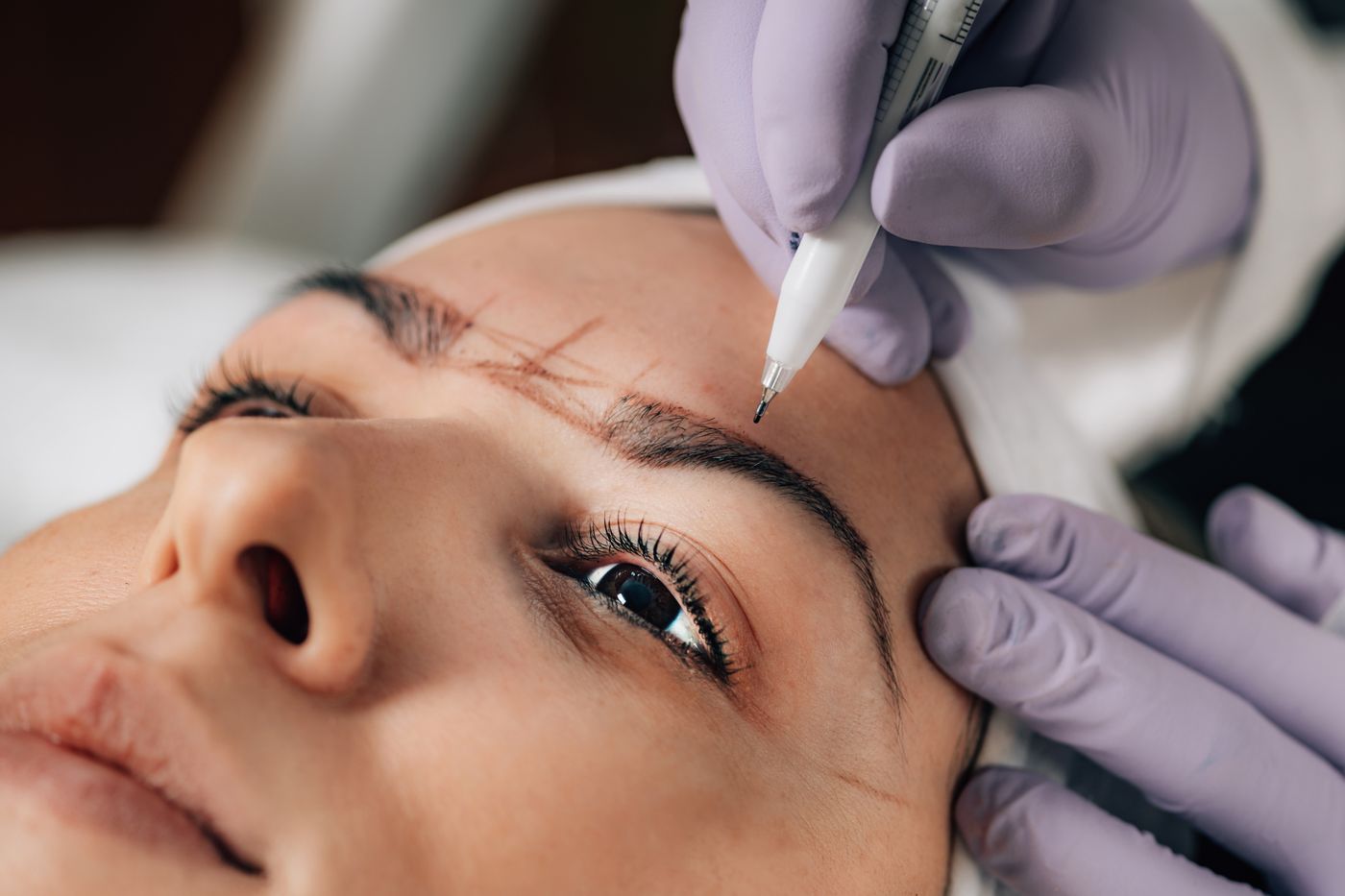
Microblading uses a hand tool to cut fine hair-like strokes into the skin. Powder and ombre brows use a machine to build soft shading from many small dots. Each suits different skin types and different results, and the hand skills behind them are learned separately. Our guides on microblading training and powder brows training go through both in detail.
They ask for different kinds of care. Lip skin is thin and always moving, and small asymmetries show when a client smiles. Eyeliner work sits right at the lash line, so steady hands and careful positioning are essential. See the Lip Tattoo Course and Eyeliner Tattoo Course, or read Choosing a Cosmetic Tattoo Course before you decide.
Every technique is built by repetition. Steady hands come from drilling on practice skins long before anyone works on a client.
A background in brows, lashes or makeup helps with face shape and client care, but it doesn’t replace tattoo technique. Entry requirements can differ from course to course, so tell us your starting point when you enquire and we’ll point you to a suitable program.
Practice skins are synthetic sheets used to rehearse strokes, shading and depth control without risk to a person. Repeated drills on them build the hand control that live work depends on. The equipment guide covers practice skins alongside machines, cartridges and mapping tools.
More than most beginners expect. Set aside regular practice time, photograph your drills so you can compare them over the weeks, and look back critically at your stroke direction and spacing. Student tips for cosmetic tattoo training sets out a practical routine.
Format and duration depend on the program. Each course page sets out the details once they are scheduled. For anything not yet listed, ask through the enquiry page rather than guessing from another provider’s timetable. Training locations are listed on Training Locations in Australia.
I Enquire · II Choose · III Prepare · IV Practise · V Continue
Begin with a course enquiry that names the technique you’re interested in. From there you confirm a course, prepare your practice space and kit, and train.
Trainer profiles are on Our Cosmetic Tattoo Trainers, and the Student Work Gallery is grouped by course. Seeing both is a good way to judge whether the teaching approach suits you.
Some artists add cosmetic tattooing to an existing beauty business, others build a dedicated studio, and many start with one technique before adding more. How to Become a Cosmetic Tattoo Artist in Australia and the Cosmetic Tattoo Career Guide go through each path.
Rules for skin penetration and cosmetic tattoo premises vary between states, territories and local councils. Check with your local council or state health department before you take on clients.
Many artists look at extra skills once their core technique is steady. The Fine Line Tattoo Course and Tattoo Removal Course pages describe these programs, and the training guide explains how the skills build on each other.

Send us the questions this page doesn’t answer, along with the technique you’re leaning towards. For general messages, use the contact page.